Wednesday, April 13, 2011

Culture Clash

A few days ago, I started a long conversation with one of my roommates and another guys I met here. I was really curious to know what people here thought of America and American culture. One guy said "I think American culture is very restrictive". I was taken aback. I was kind of shocked. American culture? Restrictive? I mean, compared to the culture here, we are practically absent of any restrictions at all. I asked why. He said that when people walk past each other in the street in the U.S., or when one meets a stranger, people tend to be very cold to each other, or dismissive of people they don't know. In Palestine, rather, one treats everyone like one's brother, and welcomes people into their home, even if, or especially, if they are strangers. Ok, ok. I agreed with that. I will admit that in America strangers don't really give a shit about each other. "But what about the culture here?" I said. Aren't there a great many restrictions here on the way one can act? This time he was taken aback. "Like what?" he asked. Well ,the first thing I came to was gender relations. Men and women don't even walk in the street together, I said. They don't even shake hands. You can't go to a cafe and smoke hookah with a girl. Or anything. Isn't that a pretty big restriction?

From there the conversation got interesting. We moved from general talk about culture to talking about "relations between men and women in the west. "You have had girlfriends?", my roommate asked. "Yes, I have had girlfriends". Then he asked, "You have, been, with a woman?" "Yes, I have 'been' with a woman. He asked me why Americans have girlfriends. He said "I don't understand. Why don't people just marry one woman, and then go on with the rest of their lives. It's so much more simple". I tried to explain in terms that he would understand, but I'm pretty sure it didn't work. I said that living with someone for the rest of your life is a big commitment, and you need to know what you are getting yourself into. We might go into a relationship, but we need time to find out if that person is compatible with us. Additionally, having girlfriends or boyfriends also teaches about what we want, what we are looking for in other people, and how to manage a relationship. It is important to know how to deal with relationships, and how to know if yo are with the right person. This ability only comes from experience. And then, not intentionally, I said that it's also important to know whether two people are sexually compatible. It just kind of came out as I was talking. This he didn't understand at all. That's not a thing that is of concern here.

He didn't understand at all. We both chalked it up to different cultures, and completely different mindsets. Explaining something like sexual behavior to someone you doesn't really think of sex as a good or nice thing to do before marriage is hard as fuck. He said "I don't know. I cannot talk with women without trouble. They make me confused. I can't think correctly". Laughing a little, and half joking, I said yes, absolutely brother. Women will do that to you. I also often can't think so straight around some women. Then he asked if men and women have sex even if they are not in love, or are not boyfriend and girlfriend. I said yes, sure. People have casual sex as well, to which he said "I do not like this. I think one man, one woman".

The other day we were on the computer, browsing through some photos his buddy had on his computer. Whenever a picture of a guy and a girl cuddling or kissing showed up, he would say something like "What is this? Not a good picture". Then several pictures of AK-47's, grenades, mortars, and M-16's showed up. Which he liked very much. He said these were beautiful. He asked me if I liked them. I said not particularly. Violence isn't really my thing. I think guns and bombs are pretty shitty. You've got it all backwards, I said. Violence is bad. Men and women kissing? That's just fine. It's kind of nice.

Don't get me wrong. Not everyone here thinks that way. There are people I've met here who, though not really open about sex and romance, are certainly enthusiastic about it and open to it. Some folks I met here love to talk to me about porn. They talk to me about various porn sites, rattle off the names of porn actresses I might know, and stuff like. One or two guys, after having a discussion about gender relations about sex, even told me about their "many girlfriends", and sexual exploits. I'm not sure how much is really true, or how much is machismo in the face of a visiting American male. In any case, I'm sure sex before marriage happens here. But I don't think anyone is very open about it.

Another weird thing about culture here that I didn't know. When you knock on someone's door, you must always stand to the left, so when the door is opened, you can't see inside the house. There might be a woman without a hijab on or something, and so you need to give them time to get ready for guests. In most houses here, there is a separate area of the house, with couches and chairs, for entertaining guests. The "inside" of the house, if you will, is not for visitors. One is not supposed to see the kitchen the bedrooms or anything. There might be a door from the guest room to the kitchen, but it is always closed, and you can't see inside.

Anyway, that conversation I had was by far one of the most eye opening and interesting conversations I ever had. People here are very curious to know about American culture, which is good because I am also super curious about every detail of Palestinian culture. As I ask more questions, I'll relay more answers. Till then-

Sunday, April 10, 2011

Who would have thought the first time I got my face waxed would be in Palestine?

So, needless to say, life is different here. Very different. There are big divergences between Palestine and the US, like alcohol, or the prevalence of Islam, or contact with women, etc... The big societal differences. But there are also lots of other little things that go a long way in making one feel like a stranger. They can be creature comforts, or just different ways of doing little things, but they make big difference.

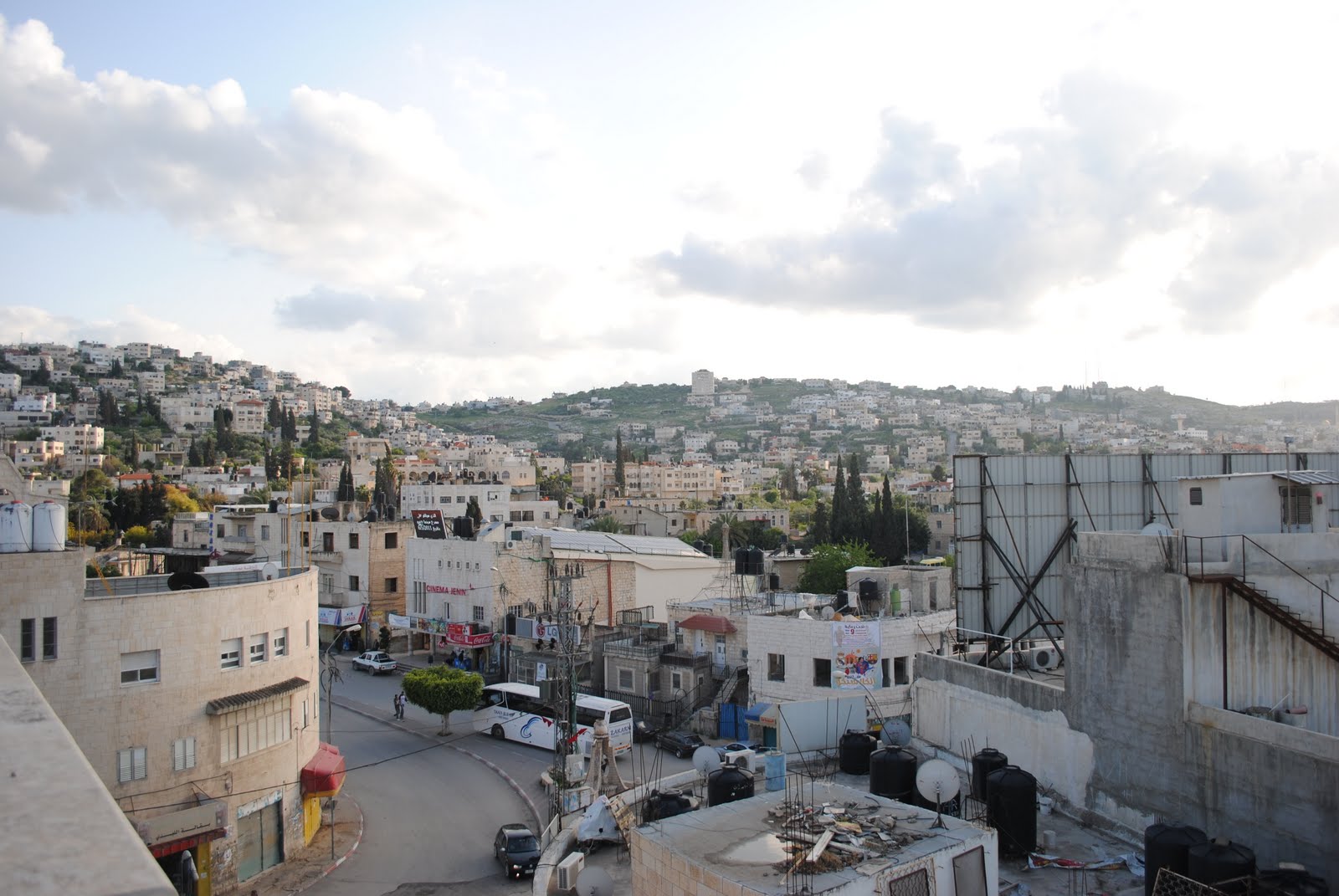
The other day I went to a small town outside of Jenin called Qabatia, where several of the people I have met here are from. We went to attend a wedding, which was totally fucking awesome. However, even wedding parties are gendered here. The men celebrate together, and the women celebrate together. At the men's celebration, there was a band and bright lights, and all the men, young and old, would dance around in a big circle. I am told that the women do no celebrate in such an "immodest" way, rather they hang around and eat and talk and sing songs.

Anyway, before the wedding, I went to a barber shop to get a shave. I've never gotten one in the states, because they're way too expensive. But in Palestine, it cost 15 shekels (about 4 dollars) to get a straight razor shave for my head and face. So, why the fuck not? First of all, the barber was both awesome and scary. This guy was talking on his cell phone, smoking a cigarette, and with his free hand was giving me a shave. With a fucking straight razor. I really wasn't sure whether I should be impressed, or worried that this guy was about to slit my throat. So the shave was done, and he pulled out some kind of gooey, lotion-ey substance that I thought was aftershave. That was until he rubbed it on my face, and it was sticky. And then in one forceful yank, much to my surprise, he pulled off what ended up being wax. I have to admit, I was shocked. It hurt. Like a bitch. Who shaves their face? Certainly not dudes, that's why we have razors. It was crazy. Afterwards, he didn't even give me any aftershave! I had to ask for some, and the guy was confused. After a few minutes on translation, he found a bottle. I asked my friend later whether this was common, and he's like "of course, it gives you much smoother shave!".

Whatever. Life is different here. As I said, very different. Another big difference: showering. Folks here don't shower with the frequency that we do in the U.S. I've taken two showers in 7 days. Holla! The first shower I took here was by far the most memorable shower I've ever taken in my entire life. The hot water in the building I'm staying in is broken (the water was off completely for the first few days I was here). My roommates asked me if I wanted to bathe, and I jumped at the chance, saying absolutely. I went into the neighbors bathroom where I was to shower, and there was a bucket of lukewarm water, and a cup, and that was it.  I drew the water from the bucket with the cup, and poured in over myself. It was super, super old school. I also have to say, it was quite difficult. Cleaning yourself without the benefit of any water pressure at all was a little challenging.

My second shower was at the house of a shepard (yes, a shepard, they still have those here) in the mountains of Qabathia. When people do have showers in their home, the water is heated with a small box mounted in the corner of the bathroom, and pipe leading to the shower head is connected to it. The water runs through it, and it heats the water, letting a very slow stream of warm water out the shower head. It's fine, except for the fact that this little box is electrically powered. Every time I accidentally touched the pipe, I got an electrical shock. Not just a shock, but a sustained electrical current. Every time I needed to grab the shower head, I got just a little bit electrocuted. I couldn't hold the shower head for more than 5 seconds, or else it would start to hurt really bad. I was kind of scared that I would die by electrocution while naked in the shower. If I die, I don't wanna go naked in a foreign country. However, I reasoned to myself, these take a shower in here pretty often, and they're not dead, so it should be good.

Whatever, life is different here. As I said, very different. I think I might have underestimated just how different it really is, and I might have overestimated my ability to integrate into and get used to a totally and completely different environment. I have never experienced the sheer amount of of culture shock that I am experiencing here. I have been fortunate enough to travel to many places in the world, but non of my other travels have prepared me for this experience. I've been to Iran, but I'm familiar with the culture, and I speak the language. Other than that, the closest I've been is Turkey, which is pretty westernized and "modern", as they say.

However, it's precisely these differences, big and small, that I came to see. And no matter how uncomfortable, they are still interesting, weird, wondrous, crazy, gross, strange, beautiful, and awesome. Stay tuned, more reports on Palestinian life to come.......

Wednesday, April 6, 2011

Perspectives on the Conflict

I ask almost everyone I meet here who speaks a little english their perspective on the conflict between Israel and Palestine. After introductions and some friendly conversation, I always go straight to what I'm really here for: to understand the conflict beyond the newspapers and headlines. 

What I have found in general is that the people here live their lives, as normally as humanly possible, against the backdrop of a seemingly never-ending conflict. When I ask most people about the conflict, they mostly say "I don't like to talk about politics". It is only after some pressure and persistence from me that folks I talk open up about their view on the 'question of Palestine'. Many people say something like "we don't know anything, only our leaders do" or "we let our leaders try to solve the situation because we can't do anything about it". After pressing a little bit harder, and saying something like "but you are Palestine, you should, and do, have the power to change your leaders and the course of the conflict", I am usually told that it doesn't really matter, that politics has lead nowhere, and that negotiations, no matter how seemingly successful, never solve anything.  

I have gotten various different views and ideas about the way forward, or possible solutions, but one thing is certain: no one really has any optimism that a solution is forthcoming. Whether people are optimistic or not about the future of the conflict is one of the first question I ask, and literally everyone I have asked says "no". It is a very frank but very truthful answer. On the other hand, most people also follow that up with "but we hope". 

One immediate answer that I have gotten several times is that the internal division between Palestinians mist be solved first before an ultimate solution with Israel can be found. The internal conflict between Fatah, which controls the West Bank, and Hamas, which controls the Gaza Strip, seems not only to have crippled the power of Palestine to move forward with a two-state solution, but has also eroded the faith Palestinians hold in finding a solution to the fragile status quo of occupation. 

I asked a man I met whether he thought that a two-state solution was the best way to go forward. He said that although he preferred a two-state solution, he was afraid it might never happen. He said that things were much better twelve years ago before the second intafada, when Israelis and Palestinians could freely go back and forth. Another man echoed his answer, saying that "it will take a very, very long time". Although they want their own nation, they see no hope of that happening any time in the near future, and in the meanwhile just want to live their lives. 

I think all of us in the west that see the situation as hopeless, or wonder why the Israelis and Palestinians can't see that a solution is in everyone's benefit have to understand that it is an extremely raw and emotional issue. A man that I talked to who goes to the Arab American University said that although he wants to find a solution, he is not, and cannot, be willing to give up land that easily because his brother and some of his best friends died fighting during the intifada. I met a man the other day who was jailed by Israeli security forces for 10 years after the intifada, and was only recently let out of prison. These memories are emotional. They stir anger and resentment towards what most people here see as an occupying invader. The other day my roommate was showing me pictures of a day trip he and his friends took to Bethlehem. Amongst the series of happy and touristy pictures were photos of several Israeli settlements that he passed. As soon as these photos came up, I sensed a change in his demeanor. I could see his mood change. There was a pain, an anger, that one could see in his eyes and hear in his voice when he talked about the settlements. Everything about the conflict, from land to borders, is rife with anger, pain, sadness, passion, and loyalty. 

At AAU I spoke to a class of English students. One of them asked me how Palestine was different from what I imagined. I said that Palestine as a whole was much more developed and built up that I had imagines, but Ramallah, which is supposed to be the cultural and economic capital of the West Bank, was much less built up than I had imagined. The teacher asked me why I thought that was, and I answered "probably because of the limitations Israel sets on goods coming in and out of Palestine". And he said "Exactly. We are not even a 'developing' country, we are stuck".  
'Stuck' is a very good word to describe the state of Palestinians in the West Bank. I would not hesitate to describe the West Bank as a very big outdoor jail. And just like a big jail in the U.S., where goods come in  and out and people trade cigarettes for various other commodities, the Palestinians work and trade and try to live their lives in this big jail. 

Palestinians can't go to Israel. One needs to get special permission to go to Israel, which is only granted if you get a job. Even then, the Israeli authorities generally don't allow people under the age of 40 apply for work permits. Men can get a tourist visa to go to Israel if they are 60 or above, and women at 45. Palestinians are technically allowed to go to Jordan, but only with a visa, which is very hard to attain, especially for young folks. A lot of the guys I met were extremely keen on seeing my pictures from my various travels, because they can't really travel. They can't really go anywhere. 

And then there is the wall. I saw it for the first time while on a bus entering Ramallah, and it was one of the most surreal things I have ever seen in my entire life. A big concrete wall that not only cuts off two people from each other, but also splits some Palestinian communities themselves. Many people have to cross checkpoints to get to work, or to go back home. From what I am told it is one of the most demeaning experiences in life. A teacher I met at AAU told me that he has to cross a checkpoint twice a day, once to get to work and once to get back home. The checkpoint opens at 7 am, and closes at 7 pm. If he ever has to work late, or is running late for whatever reason, he's fucked. Sometimes the IDF sets up random checkpoints along the road in Palestine. On my from Ramallah to Jenin, there was a random checkpoint for people going south on the road, but luckily not for people going north. Not only do Palestinians have trouble travelling outside of Palestine, but they also have trouble travelling within Palestine. 

The Israeli/Palestinian conflict has become a seemingly endless series of failed negotiations, stalled peace talks, and above all, hatred and anger. I don't know what the solution is, and it seems that no one here really does either. But, as they say here, "we hope".